Atx Vs Mini Itx Vs Micro Atx: Choosing the Right Motherboard Form Factor
When building a PC, the motherboard form factor is one of the first decisions that shapes the entire project. The three most common sizes—ATX, Micro ATX, and Mini‑ITX—each bring a distinct blend of space, expandability, and price. Understanding how they differ helps you match the board to your performance goals, case constraints, and budget.
Physical Dimensions and Case Compatibility
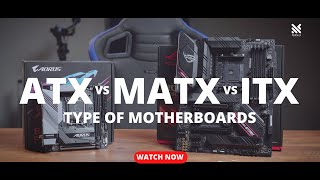
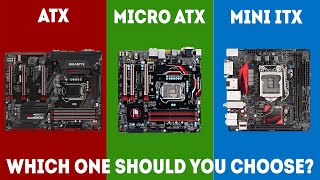
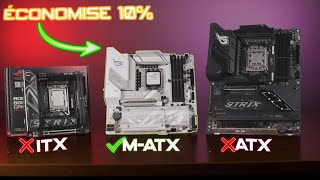
ATX boards measure roughly 305 mm × 244 mm (12 in × 9.6 in). This classic size fits the majority of mid‑tower and full‑tower cases, giving you plenty of room for components and cooling solutions. Micro ATX shrinks to about 244 mm × 244 mm (9.6 in × 9.6 in), allowing it to sit comfortably in smaller cases while still offering a solid selection of expansion slots. Mini‑ITX is the most compact at 170 mm × 170 mm (6.7 in × 6.7 in), making it ideal for ultra‑small form‑factor (SFF) chassis, HTPCs, and portable workstations.
Expansion Slots and Connectivity
ATX motherboards typically provide seven PCIe slots, multiple M.2 slots, and a full complement of SATA ports. This abundance of slots supports multi‑GPU setups, extensive storage arrays, and add‑on cards such as sound or network adapters. Micro ATX reduces the PCIe slots to usually three, but still offers two or three M.2 slots and enough SATA connections for most enthusiast builds. Mini‑ITX generally includes a single PCIe x16 slot, one or two M.2 slots, and a limited number of SATA ports, which means you must prioritize components and may need external solutions for extra storage.
Power Delivery and Overclocking Potential
Because ATX boards have more space for power phases and larger VRM heatsinks, they tend to deliver the most robust power delivery. This makes them the preferred choice for high‑end CPUs and aggressive overclocking. Micro ATX designs have improved dramatically, and many high‑quality models now feature VRMs comparable to their ATX counterparts, though they may still be slightly less capable under extreme loads. Mini‑ITX boards often use compact VRM layouts; while many are perfectly adequate for mainstream CPUs, they can be a limiting factor when pushing a high‑performance processor to its limits.
Cooling Solutions and Airflow
With a larger chassis, ATX builds can accommodate multiple case fans, large radiators, and custom water‑cooling loops without crowding. Micro ATX offers a good balance: most mid‑tower cases provide enough room for a couple of fans and a 240 mm radiator, while still keeping the overall footprint modest. Mini‑ITX cases, especially those under 200 mm in height, often restrict radiator size to 120 mm or 140 mm and rely heavily on strategic fan placement. Choosing the right case and ensuring adequate airflow become critical when using a Mini‑ITX board.
Cost Considerations
Because ATX boards are the most common, they benefit from a wide price range and intense competition, giving buyers options from budget to premium. Micro ATX typically sits slightly lower in cost, offering a sweet spot for builders who want decent features without the price of a full‑size board. Mini‑ITX models can be pricier per feature, as manufacturers must pack the same functionality into a smaller PCB, often adding premium components to maintain stability.
Use‑Case Scenarios
- ATX: Ideal for gaming rigs, content‑creation workstations, and anyone planning multi‑GPU or extensive storage configurations.
- Micro ATX: Perfect for compact yet powerful desktops, budget gaming builds, and users who want a balance of size and expandability.
- Mini‑ITX: Suited for space‑constrained environments, home theater PCs, portable gaming systems, and minimalist builds where aesthetics and footprint dominate.
Future‑Proofing and Upgrade Paths
When you think about future upgrades, ATX offers the most flexibility. Adding another graphics card, expanding storage, or swapping in new PCIe cards is rarely limited by space. Micro ATX still provides a reasonable upgrade path, though you may be constrained to a single GPU and fewer add‑on cards. Mini‑ITX’s limited slots mean that major upgrades often require a board replacement, so it’s best suited for users who plan to keep the system relatively static after the initial build.
Choosing the Right Form Factor for Your Build
Start by measuring the case you intend to use and decide how much internal space you can allocate for components and cooling. If you need maximum performance and plan to expand over time, ATX is the safest bet. If you want a smaller chassis without sacrificing too many features, Micro ATX delivers a solid middle ground. For the smallest possible footprint—perhaps for a living‑room media box or a travel‑ready workstation—Mini‑ITX provides the compact solution, provided you accept the trade‑offs in expansion and cooling