What Is the Mac Mini?
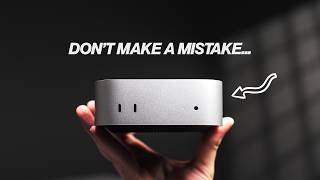
The Mac Mini is Apple’s compact desktop computer, designed to deliver macOS performance in a small form factor that can sit on a desk, be mounted behind a monitor, or even be tucked away in a media cabinet. Unlike the iMac, which includes a built‑in display, the Mac Mini provides the core computer components only, allowing users to pair it with any compatible monitor, keyboard, and mouse. This flexibility, combined with Apple’s reputation for tight hardware‑software integration, makes the Mac Mini a popular choice for both casual users and professionals who need a space‑saving workstation.
History and Evolution
First introduced in 2005, the original Mac Mini featured an Intel processor, a modest amount of RAM, and a simple plastic enclosure. Over the years, Apple refined the design, moving to aluminum bodies, adding faster processors, and expanding storage options. The most recent generation, released in 2023, transitioned to Apple’s own silicon, offering the M2 and optional M2 Pro chips. This shift to custom ARM‑based processors has dramatically improved performance per watt and brought new capabilities such as hardware‑accelerated video encoding and machine‑learning tasks.
Design and Build
The Mac Mini measures roughly 7.7 inches square and 1.4 inches tall, weighing under three pounds. Its minimalist aluminum chassis not only looks sleek but also helps dissipate heat efficiently. The device is built with a single-piece enclosure that opens easily for memory upgrades in older Intel models; however, the current Apple‑silicon versions have unified memory that is soldered to the logic board, making post‑purchase upgrades impossible. The compact size makes it ideal for office desks, home entertainment centers, and even for use as a server in small‑business environments.
Hardware Options
Apple offers two primary configurations for the Mac Mini:
- Base Model – M2: Equipped with an 8‑core CPU (four performance cores and four efficiency cores), a 10‑core GPU, and 8 GB of unified memory. Storage starts at 256 GB SSD and can be configured up to 2 TB.
- Enhanced Model – M2 Pro: Adds a 12‑core CPU (eight performance cores and four efficiency cores), a 19‑core GPU, and up to 24 GB of unified memory. Storage options range from 512 GB to 2 TB SSD.
Both models support Wi‑Fi 6, Bluetooth 5.0, and a range of ports that make connectivity straightforward.
Ports and Connectivity
The Mac Mini balances a variety of ports while maintaining its small footprint. Typical configurations include:
- Two Thunderbolt 4 (USB‑C) ports that support up to 40 Gbps data transfer, external GPU, and dual‑4K display output.
- Two USB‑A ports for legacy peripherals.
- HDMI 2.0 for a single 4K monitor at 60 Hz.
- Gigabit Ethernet (standard) with an optional 10 Gb Ethernet upgrade.
- 3.5 mm headphone jack.
These connections allow the Mac Mini to serve as a hub for multiple monitors, fast external storage, and network‑intensive tasks without requiring additional adapters.
Typical Use Cases
Because it delivers full macOS functionality in a tiny package, the Mac Mini fits several scenarios:
- Home Office: Pair with a monitor and ergonomic accessories for a clean, low‑profile workstation.
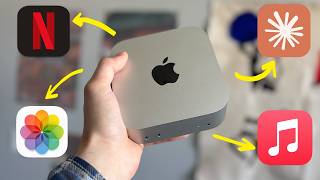
- Media Center: Connect to a TV via HDMI and use apps like Apple TV or Plex for streaming and local playback.
- Development Machine: The M2 chips handle Xcode, Docker, and other development tools efficiently, making the Mac Mini a cost‑effective option for software engineers.
- Small‑Business Server: With its fast SSD and optional 10 Gb Ethernet, the Mac Mini can host file sharing, print services, or lightweight web applications.
- Creative Workstation: The M2 Pro version provides enough GPU horsepower for photo editing, video rendering, and music production when paired with an external monitor.
Pros and Cons
Every device has strengths and trade‑offs. Below is a concise overview:
- Pros
- Compact size saves desk space.
- Apple‑silicon performance rivals many larger desktops.
- Quiet operation thanks to passive cooling.
- Versatile port selection for both modern and legacy peripherals.